
Dry ice is widely used to refrigerate products during transportation, but it’s also a regulated hazardous material. Many shippers underestimate the risks associated with dry ice because it doesn’t look like a traditional hazardous substance.
In reality, dry ice presents physical, pressure-related, and asphyxiation hazards that require strict compliance with federal and international transportation regulations. Anyone involved in preparing, offering, or transporting shipments that contain dry ice must understand how to ship it correctly.
Hazmat University provides online hazmat and dangerous goods training designed to help shippers, freight forwarders, and hazmat employees understand these requirements. Knowing how to apply the regulations is essential for compliance and safety when shipping with dry ice.
Shipping with dry ice starts with training. Hazmat University’s online hazmat courses teach you how to correctly classify, package, mark, label, and document dry ice shipments under 49 CFR, IATA, and IMDG regulations. Start your online hazmat training today and eliminate guesswork before your next shipment.
What is Dry Ice and Why Is It Regulated?
Dry ice is the solid form of carbon dioxide. Unlike regular ice, it does not melt into a liquid. Instead, it undergoes sublimation, meaning it changes directly from a solid into carbon dioxide gas. This unique property makes dry ice extremely effective for keeping products cold during transport, particularly food, pharmaceuticals, and biological materials.
However, sublimation also creates serious transportation hazards. Dry ice is extremely cold and can cause severe burns if handled improperly. As it sublimates, carbon dioxide gas is released, which can build pressure inside packages that are not properly vented. In confined spaces, elevated carbon dioxide levels can displace oxygen and create an asphyxiation risk for transport workers.
Because of these hazards, dry ice is regulated as a hazardous material during transportation.
Is Shipping Dry Ice Regulated Under DOT and International Rules?
Yes, shipping dry ice is regulated. Dry ice is shipped under the proper shipping name Carbon Dioxide, Solid with the UN number UN1845. This entry appears in all major hazardous materials regulations, including 49 CFR, the IATA Dangerous Goods Regulations, and the IMDG Code.
Under US ground transportation rules, dry ice is not fully regulated when shipped domestically by highway, provided the minimum packaging requirements in 49 CFR 173.217 are met. However, dry ice becomes fully regulated when shipped by air or vessel, and additional requirements apply depending on whether it is used to cool dangerous goods or non-dangerous goods.
Awareness of these distinctions is critical to avoiding violations.
Below, you see the entry for Carbon Dioxide, Solid from the 49 CFR. Notice the A and W in the first column of the table. These symbols mean that the entry is regulated only in the air and vessel mode in the United States. Essentially, dry ice is not regulated by ground transport within the United States while complying with minimum requirements for packing in accordance with 49 CFR 173.217.
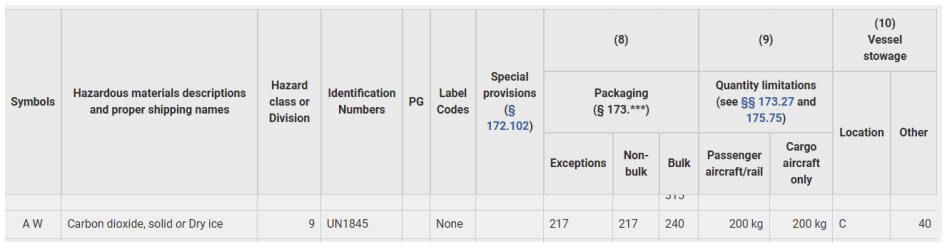
But what if you’re shipping in the air or vessel mode? Let’s look at them individually.
Shipping Dry Ice by Air Under IATA Regulations
When shipping dry ice by air, the International Air Transport Association (IATA) Dangerous Goods Regulations apply. The requirements differ based on what the dry ice is cooling.
We’ll use the IATA Regulations to review the requirements for shipping dry ice by air. We’ll explore two shipping scenarios, using dry ice with non-dangerous goods and using dry ice with dangerous goods. The examples below do not consider State and Operator variations.
Dry Ice Used with Non-Dangerous Goods
First, dry ice is used to keep non-dangerous goods such as food cold or frozen. The entry in the list of dangerous goods for Carbon Dioxide, Solid is below.
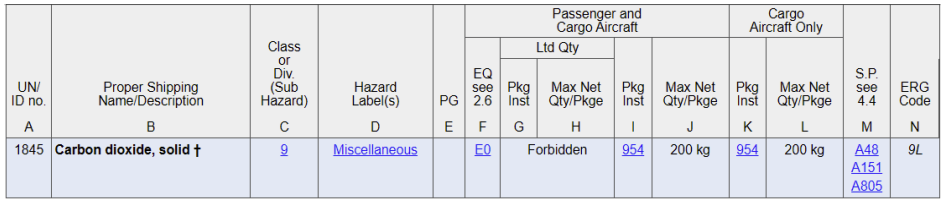
When dry ice is used to cool non-dangerous goods such as food or medical samples, IATA allows up to 200 kg of dry ice per package on both passenger and cargo aircraft. The applicable packing instruction is PI 954.
Dry ice doesn’t require UN specification packaging, but the package must be designed to allow carbon dioxide gas to vent. Failure to allow venting can result in package rupture during flight.
The package must be marked with:
- Shipper and consignee name and address
- Proper shipping name and UN number (Carbon Dioxide, Solid, UN1845)
- Class 9 hazard label
- Net weight of dry ice in kilograms
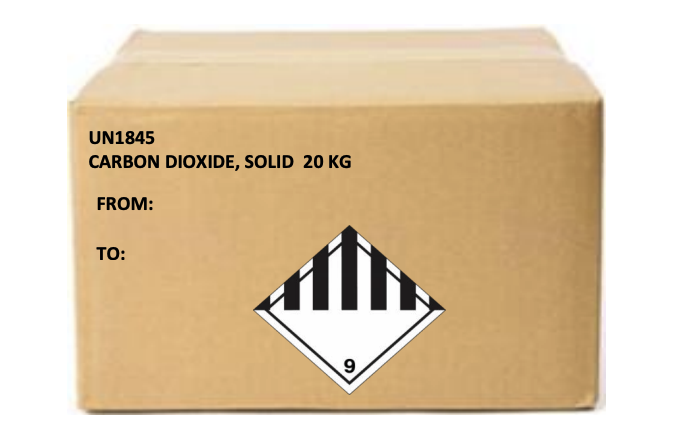
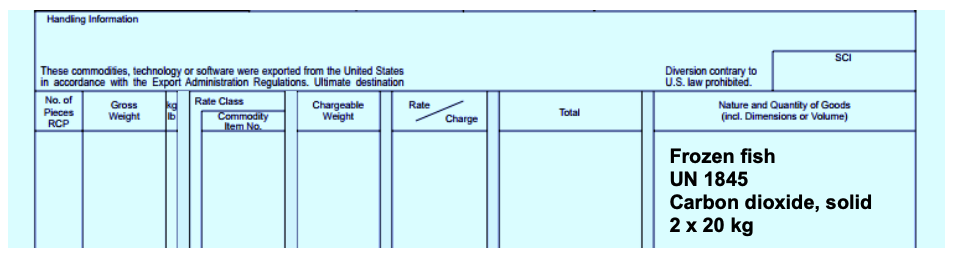
A Shipper’s Declaration for Dangerous Goods is not required when dry ice is used solely with non-dangerous goods. With that said, the presence of dry ice must be indicated on the Air Waybill so the flight crew is aware.
Dry Ice Used with Dangerous Goods by Air
When dry ice is used to cool dangerous goods, additional compliance steps apply. The dangerous goods themselves must be packaged, marked, labeled, and documented according to their applicable requirements.
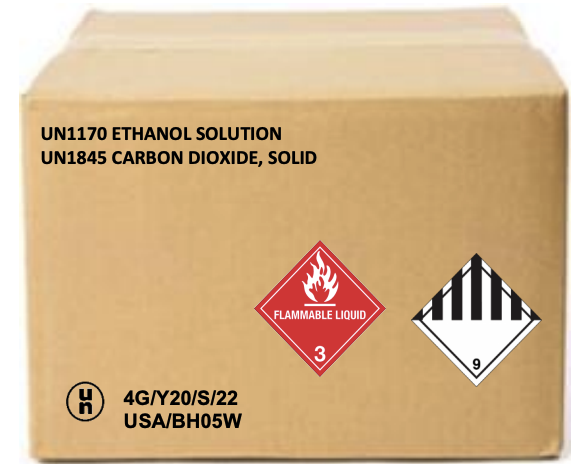
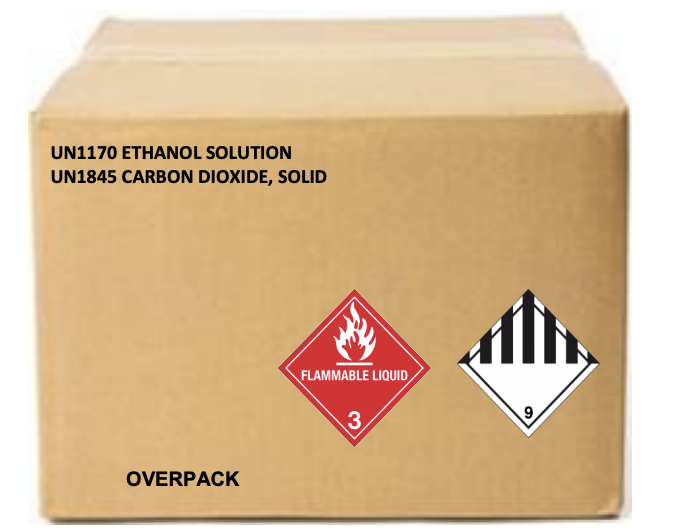
Dry ice may be placed inside the same UN-tested package as the dangerous goods or placed outside in an overpack. In either case, the package must display the proper shipping name, UN number, and net weight of dry ice.
A Shipper’s Declaration for Dangerous Goods is required whenever dry ice is used with dangerous goods. If dry ice is packed in the same package, the “all packed in one” statement is used, and Q-value calculations are not required for the dry ice. If dry ice is in an overpack, each dangerous good and the dry ice must be listed separately, and the overpack statement must be included.
Air shipments with dry ice are one of the most common sources of dangerous goods violations. Hazmat University’s online IATA training walks you through real-world dry ice scenarios so you understand exactly when declarations, markings, and labels are required. Choose our online hazmat training courses and ship with confidence.
Whichever way the dry ice is packaged, the proper shipping name, UN number (Carbon Dioxide, Solid, UN1845) and net weight of dry ice must be shown on the outside of the packaging. See examples below
Dry ice in the same UN tested package as DG
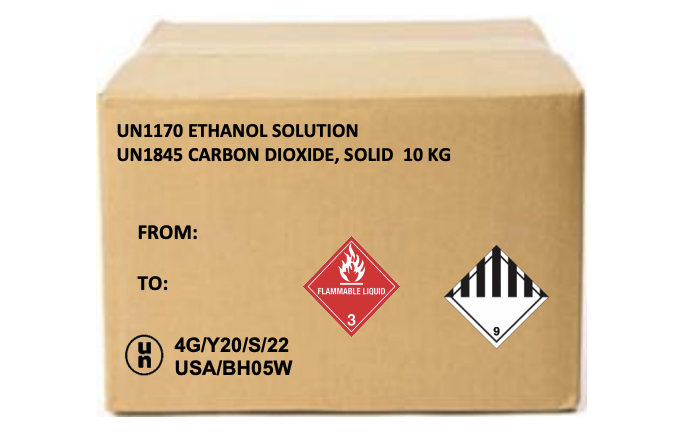
Dry ice in the same overpack with DG
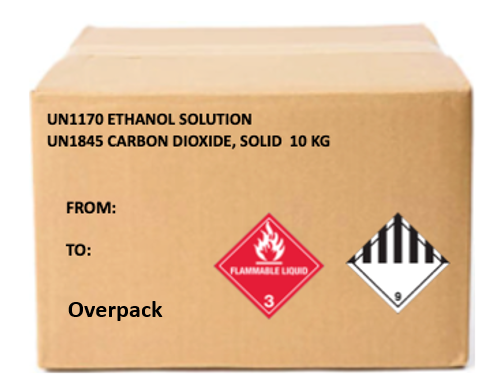
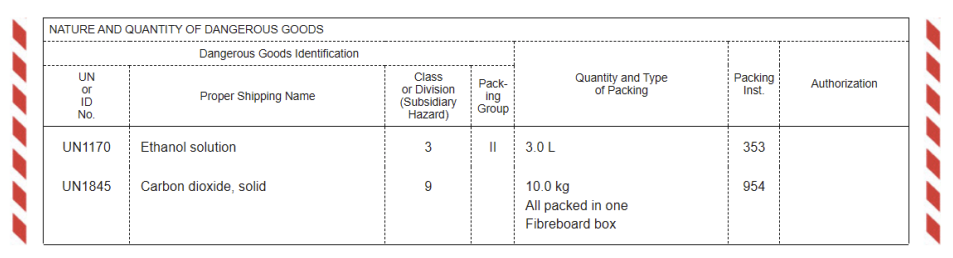
Whenever dry ice is used to cool dangerous goods, a Shipper’s Declaration for Dangerous Goods (DGD) is required.
When the dry ice is packed in the same UN tested packaging as the material, we use the “all packed in one” statement on the DGD. Q-value is not required to be calculated in this case as dry ice is excepted from the Q-value requirement.
Dry ice in the same UN tested package as DG
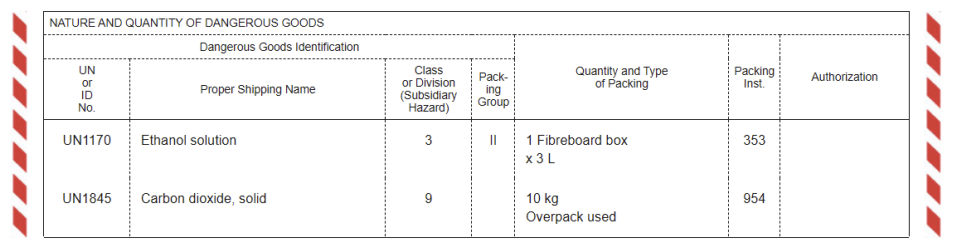
When dry ice is added to an overpack, the basic description for all of the dangerous goods and the dry ice are entered individually. The overpack used statement is added under the quantity and type of packing.
Dry ice in the same overpack as DG
Shipping Dry Ice by Ocean Under the IMDG Code
Dry ice shipped by vessel is regulated under the International Maritime Dangerous Goods Code. While packaging requirements are similar to air shipments, documentation rules are more stringent.
Dry ice does not require UN-tested packaging for ocean transport, but it must be placed in strong packaging that allows for adequate venting. The package must display the proper shipping name and UN number and include the Class 9 hazard label.
When dry ice is used to cool non-dangerous goods, documentation is still required under the IMDG Code. This is a key difference from air shipments. Shipping papers must include the full shipper and consignee information, the proper shipping name, UN number, and total quantity of dry ice.
When dry ice is used with dangerous goods, the dangerous goods must be fully documented, and the dry ice must be listed as a separate entry. The net weight of dry ice does not need to be displayed on the package for vessel shipments.
Dry ice used to cool non-DG
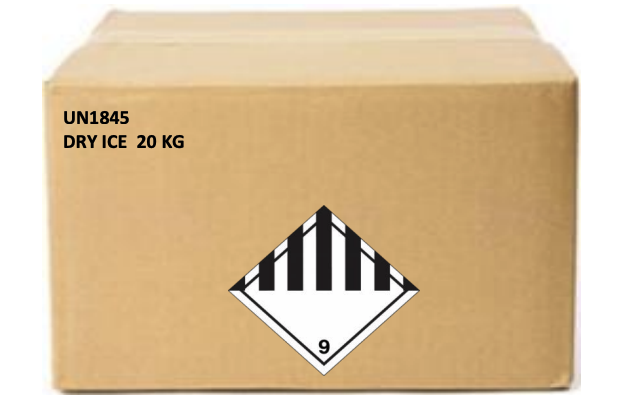
Just as in the air mode, when dry ice is used to cool dangerous goods, the dangerous goods must be packaged, marked and labeled, and documented as normal. The dry ice may be placed inside the DG packaging or outside the packaging in an overpack. Whichever way the dry ice is packaged, the proper shipping name and UN number (Carbon Dioxide, Solid, UN1845 or Dry Ice UN1845) of dry ice must be shown on the outside of the packaging. The net weight of dry ice in the package is not required to be displayed on the outside of the package. See examples below.
Dry ice in the same package as DG
Dry ice in the same overpack as DG
The documentation requirements in the IMDG Code have some notable differences from the IATA regulation. First, documentation is always required to accompany a shipment that has dry ice in it. This includes situations where the dry ice is cooling non-dangerous goods. The full documentation requirements are in place including the need for the full name and address of the shipper and consignee, the basic description of the dry ice and the total quantity of dangerous goods. See below for example documents that correspond to the example packages above.
Dry ice used to cool non-DG

Dry ice in the same package as dangerous goods
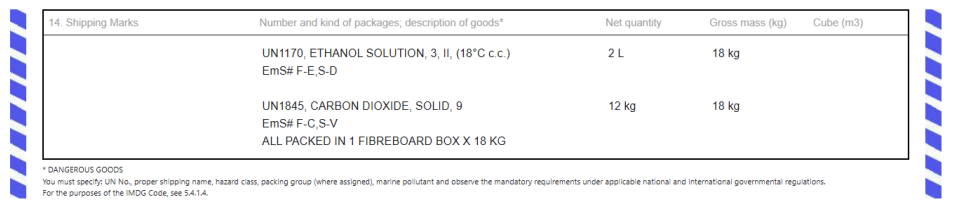
Dry ice in an overpack with dangerous goods

It’s important to note that in the IMDG Code, Carbon Dioxide, Solid and Dry Ice are proper shipping names.
Marking and Placarding Cargo Transport Units
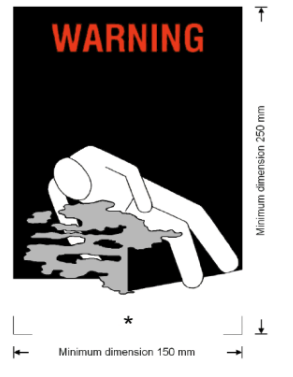
Cargo transport units (CTU) loaded with dry ice must display a Class 9 placard on all four sides of the container. In addition, an asphyxiant warning marking must be applied to all access points. This marking (shown below) must clearly identify the presence of Carbon Dioxide, Solid and warn anyone entering the unit of the oxygen displacement risk.
These requirements are sometimes overlooked and are a common source of noncompliance during inspections.
The above summarizes the requirements for shipping dry ice. Please refer to the regulations to be 100% when shipping your dry ice, whether it accompanies a non-DG or DG.
Why Training Matters When Shipping with Dry Ice
Dry ice shipments involve multiple regulatory layers that change depending on the mode of transportation and whether dangerous goods are present. A single error in packaging, marking, or documentation can result in shipment delays, rejected cargo, fines, or safety incidents.
Federal regulations require hazmat training for any employee performing a hazmat function. This includes classifying materials, preparing packages, completing documentation, and offering shipments for transport.
Online hazmat training allows employees to learn these requirements without disrupting operations.
Before your next dry ice shipment moves by air or vessel, make sure your team understands the rules. Hazmat University’s online hazmat training courses provide step-by-step guidance for shipping dry ice safely and legally. Enroll today, earn your certificate instantly, and ship while knowing your compliance is up to date.
Why Choose Online Dry Ice Training from Hazmat University
Hazmat University provides self-paced online hazmat training that reflects the most current versions of 49 CFR, IATA, and IMDG regulations. Courses include interactive lessons, real-world examples, and knowledge checks designed to reinforce understanding.
Online training allows employees to complete initial or recurrent training on their schedule while ensuring compliance documentation is generated immediately upon completion.
Shipping with dry ice requires a clear understanding of how regulations apply across different modes of transportation and shipment types. With proper training, dry ice can be used safely and effectively without risking compliance failures.
Hazmat University offers comprehensive online hazmat training for shippers, freight forwarders, and hazmat employees who handle dry ice and other regulated materials. Our courses are built by experienced instructors and updated continuously to reflect regulatory changes.
If you ship products refrigerated with dry ice, do not risk costly mistakes. Enroll in Hazmat University’s online hazmat training courses to ensure your dry ice shipments meet DOT, IATA, and IMDG requirements. Learn online at your own pace, receive your certificate instantly upon completion, and move every shipment forward with confidence, competence, and full regulatory compliance.
Be Confident. Be Competent. Be Compliant.
Originally Posted: November 28, 2023 | Updated: February 25, 2026
