
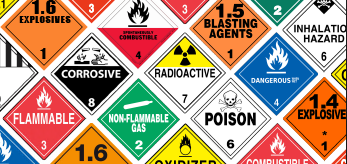
DOT Hazard Class: Reviewing The 9 Hazard Classes

dot hazard classes

A Practical Guide to Identifying and Shipping Hazardous Materials Safely

Shipping hazardous materials isn’t just a logistical task. It’s a regulated safety function with real consequences for people, property, and the environment. Every hazmat shipment begins with one foundational decision: identifying the correct DOT hazard class. When that decision is wrong, everything that follows packing, labeling, documentation, and carrier acceptance becomes noncompliant.

The US Department of Transportation classifies hazardous materials into nine DOT hazard classes under Title 49 of the Code of Federal Regulations (49 CFR). These classes define how materials behave, the risks they pose during transportation, and the safety controls required to move them legally by ground, air, or vessel.

Start with the right foundation. Hazmat University’s online DOT hazard class training teaches you how to correctly identify, classify, and ship hazardous materials under the latest 49 CFR requirements. Get compliant without the guesswork.

What Is a DOT Hazard Class

A DOT hazard class is a regulatory category assigned to a hazardous material based on its primary physical or chemical hazard during transportation. Hazard classes determine:

  • Required packaging specifications
  • Marking and labeling obligations
  • Shipping paper language
  • Mode-specific restrictions
  • Emergency response considerations

Every hazmat shipper must correctly assign a hazard class before offering a shipment into commerce. This requirement applies to ground (49 CFR), air (IATA), and vessel (IMDG) shipments, with additional international harmonization considerations.

The 9 DOT Hazard Classes at a Glance

The table below provides a snippet-friendly overview of all nine DOT hazard classes, including common examples encountered in real shipping environments.

DOT Hazard Class Hazard Type Common Examples
Class 1 Explosives Fireworks, ammunition, blasting agents
Class 2 Gases Aerosols, propane, oxygen
Class 3 Flammable Liquids Perfumes, paints, alcohol
Class 4 Flammable Solids Matches, lithium metal, oily rags
Class 5 Oxidizers & Organic Peroxides Hydrogen peroxide, fertilizers
Class 6 Toxic & Infectious Substances Pesticides, medical specimens
Class 7 Radioactive Materials Tritium exit signs, nuclear fuel
Class 8 Corrosives Lead acid batteries, acids
Class 9 Miscellaneous Hazards Lithium batteries, airbags


DOT Hazard Class Breakdown

Let us now take a look at the nine DOT hazard classes


Hazard Class 1 – Explosives

This dot hazard class is further divided into six divisions: 

1.1 Explosives (with a mass explosion hazard) (e.g. dynamite and blasting explosives)

1.2 Explosives (with a projection hazard) (e.g. weapons cartridges and hand grenades)

1.3 Explosives (with predominately a fire hazard) (e.g. flash powder and commercial-grade fireworks)

1.4 Explosives (with no significant blast hazard) (e.g. model rocket motors and consumer-grade fireworks)

1.5 Very insensitive explosives; blasting agents (e.g. ammonium nitrate-fuel oil mixture and very insensitive explosive articles)

1.6 Extremely insensitive detonating substances (e.g. extremely insensitive explosive articles)

Explosives are substances designed to function through explosion, deflagration, or rapid chemical reaction. DOT further divides Class 1 into six divisions based on explosion type and severity, ranging from mass explosion hazards to extremely insensitive articles.

Examples include commercial fireworks, ammunition, blasting agents, and detonators. Even low-risk consumer fireworks fall under Class 1 and trigger strict packaging and segregation rules.


Hazard Class 2 – Gases

Gases are materials that exert pressure at 20°C or are liquefied or dissolved under pressure.

This hazard class is further broken down into three divisions: 

2.1 Flammable gas (e.g. spray paint and lighters)

2.2 Non-flammable compressed gas (e.g. oxygen generators and shock absorbers) 

2.3 Poisonous gas (e.g. Chlorine Gas and Phosgene Gas)

Aerosols frequently cause classification errors because they combine gas properties with consumer packaging. Training is critical to avoid misclassification.


Hazard Class 3 – Flammable Liquids

Flammable liquids are substances with a flash point of 60°C or lower. Common examples include perfumes, paints, solvents, and alcohol-based products.

Many holiday, cosmetic, and industrial shipments fall under Class 3, making it one of the most frequently mishandled hazard classes in commerce.


Hazard Class 4 – Flammable Solids

Class 4 materials present ignition risks through friction, heat, or contact with water.

This hazard class includes three divisions of hazardous materials: 

4.1 Flammable solid (e.g. match sticks and desensitized solid explosives)

4.2 Spontaneously combustible material (e.g. Aluminum borohydride, oily rags)

4.3 Dangerous when wet material (e.g.  Barium and lithium metal)

Improper moisture control or packaging failures can rapidly escalate these hazards.


Hazard Class 5 – Oxidizing Substance and Organic Peroxide

This hazard class is comprised of two divisions of hazardous materials: 

5.1 Oxidizer (e.g. hydrogen peroxide and calcium chlorate)

5.2 Organic Peroxide (e.g. Ammonium nitrate fertilizers and hardeners or accelerators)

Oxidizers release oxygen and intensify fires, while organic peroxides are thermally unstable substances used in manufacturing and chemical processing.

Examples include hydrogen peroxide, calcium chlorate, fertilizers, and curing agents. These materials may appear harmless but significantly increase fire severity.


Hazard Class 6 – Poisonous/Toxic and Infectious Substance

Class 6 includes materials that are poisonous to humans or animals, as well as infectious substances capable of causing disease.

This dot hazard class contains two divisions of hazardous materials: 

6.1 Poisonous/Toxic material (e.g. nicotine and arsenic)

6.2 Infectious substance (e.g. Covid19 test samples and regulated medical waste)

Examples range from nicotine and arsenic to regulated medical waste and diagnostic specimens. Classification errors in this class frequently result in regulatory penalties.

If your shipments involve chemicals, aerosols, lithium batteries, or medical materials, Hazmat University’s online hazard classification training helps you identify the correct class before costly mistakes happen. Learn at your own pace, on your schedule.


Hazard Class 7 – Radioactive Material

Radioactive materials emit ionizing radiation and require specialized handling, labeling, and documentation. Even low-level radioactive items such as tritium exit signs are regulated under Class 7.

Training ensures shippers understand activity limits, packaging types, and emergency response requirements.


Hazard Class 8 – Corrosive Material

Corrosives cause irreversible damage to skin or metals. Common examples include acids, degreasers, and lead acid batteries.

Battery shipments frequently trigger Class 8 compliance issues due to leaking, improper packaging, or incorrect hazard communication.


Hazard Class 9 – Miscellaneous Hazardous Material  

Class 9 captures hazardous materials that do not fit neatly into other classes but still present transportation risks.

Examples include lithium batteries, airbag modules, dry ice, and environmentally hazardous substances. Lithium batteries are the most common Class 9 item and one of the leading causes of shipping violations.


How to Identify the Correct DOT Hazard Class

Correct classification follows a logical process:

  1. Review the Safety Data Sheet (SDS)
  2. Identify primary physical and chemical hazards
  3. Determine flash point, reactivity, toxicity, or pressure characteristics
  4. Match the hazard profile to DOT definitions
  5. Verify classification against the Hazardous Materials Table

This process requires training. Guesswork leads to mislabeling, rejected shipments, and enforcement actions.

Why Proper Hazard Classification Matters

Each hazard class carries unique requirements for packaging, marking, labeling, and documentation. Incorrect classification creates a domino effect of violations that can result in:

Federal regulations require hazmat training for any employee performing a hazmat function. This includes classification, packaging, documentation, and offering shipments for transport.

Why Online Training Is the Smartest Way to Learn DOT Hazard Classes

Online hazmat training allows employees to learn complex classification rules without disrupting operations. Hazmat University’s online courses:

  • Reflect the latest 49 CFR, IATA, and IMDG updates
  • Include interactive exercises and quizzes
  • Allow self-paced learning
  • Provide instant certificates of completion
  • Support initial and recurrent training needs

This flexibility ensures compliance stays current as regulations evolve.

Before your next shipment leaves the dock, make sure your hazard classification knowledge is current. Hazmat University’s online training courses help shippers, freight forwarders, and hazmat employees stay compliant across ground, air, and vessel transport. Enroll today and ship with confidence.

Learn DOT Hazard Classes the Right Way

Knowledge of DOT hazard classes is not optional. It is the foundation of safe, compliant hazardous materials transportation. Whether you ship lithium batteries, aerosols, chemicals, or medical materials, proper classification protects your business and everyone in the supply chain.

Hazmat University provides comprehensive online hazmat training built on the latest regulatory requirements. Our courses are developed by experienced instructors and designed to make complex regulations practical, understandable, and immediately applicable.

Enroll in Hazmat University’s online hazmat training courses today to ensure your team understands how to correctly identify, classify, and ship hazardous materials under 49 CFR, IATA, and IMDG regulations. Start training now and move forward with confidence, compliance, and control.

To learn more, call us at (844) 532-7634 /(609) 860-0300 or contact us online.

Be Confident. Be Competent. Be Compliant.


Originally Posted: April 24, 2020 | Updated: January 15, 2026