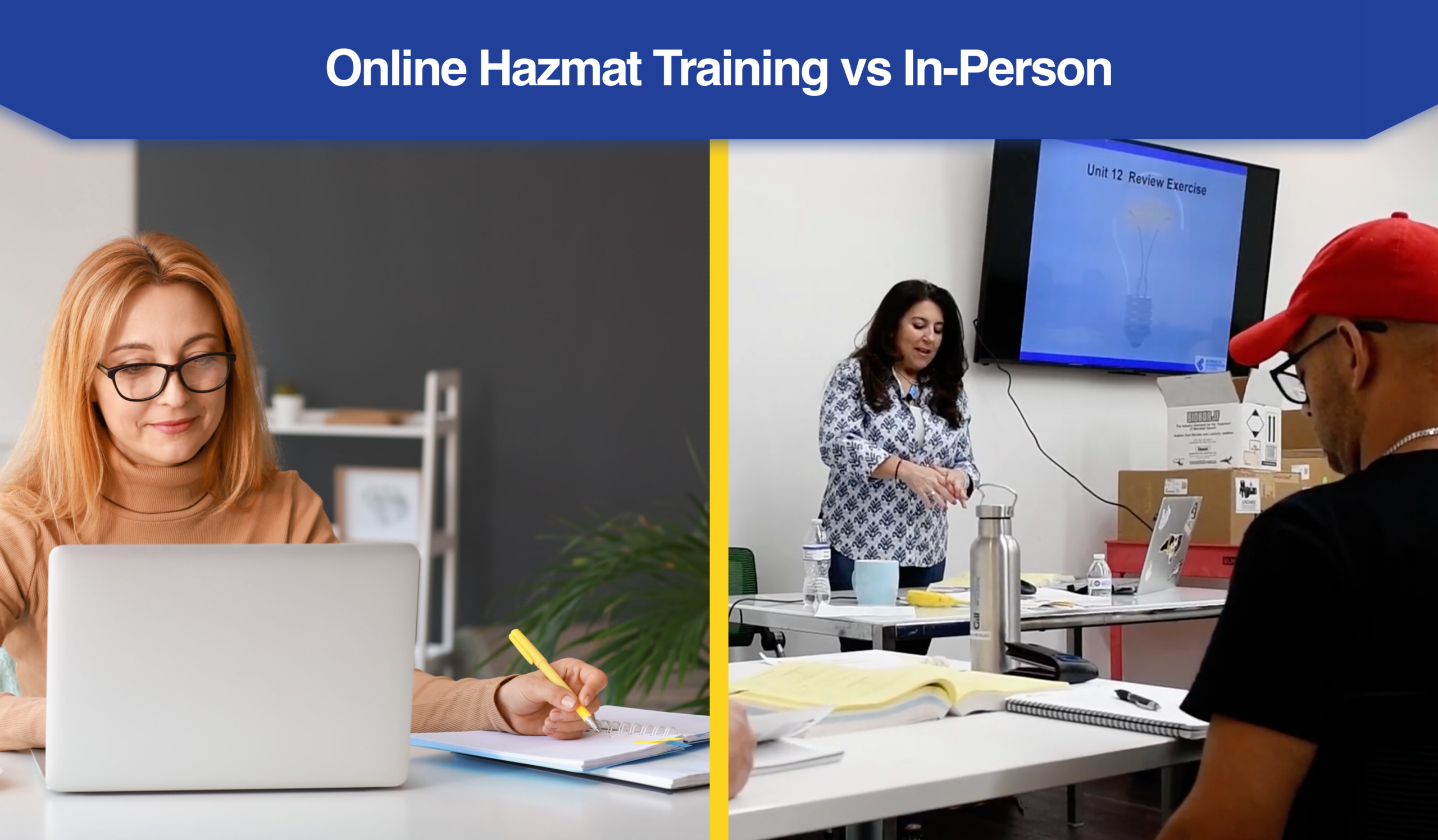
Hazmat training has evolved significantly over the past decade. As regulations grow more complex and supply chains move faster, organizations need training solutions that are accurate, accessible, and aligned with real world operations. Online hazmat training has become the primary option for many companies, but an important question remains. Does online training work for everyone, and if not, what alternatives exist?
Hazmat University provides comprehensive online hazmat training courses designed to meet federal and international training requirements across ground, air, and vessel transport. With self-paced modules, interactive knowledge checks, and content aligned to the latest 49 CFR, IATA, and IMDG regulations, Hazmat University offers a practical starting point for organizations seeking efficient and compliant training. Explore online hazmat training options today and give your team immediate access to up to date regulatory instruction.
Why Online Hazmat Training Is Effective for Many Organizations
Online hazmat training works because it aligns with how modern organizations operate. Employees are distributed across locations, schedules vary, and regulatory updates occur frequently. Online training addresses these realities by delivering standardized instruction without logistical barriers.
Hazmat University online training courses are built by experienced instructors who actively monitor regulatory changes. This ensures learners are not relying on outdated interpretations of hazardous materials requirements. The structured nature of online training also promotes consistency. Every participant receives the same core information, which is critical for compliance programs that span multiple facilities or regions.
Another key strength of online training is accessibility. Employees can complete required training without travel, classroom scheduling, or operational downtime. This is particularly valuable for recurrent training, where the goal is reinforcement and regulatory refresh rather than hands on skill building.
Online hazmat training is especially effective for roles that involve documentation, classification, marking, labeling, and general regulatory awareness. These functions rely heavily on rule interpretation and procedural accuracy, which translates well to a digital learning environment.
Key Advantages of Online Hazmat Training
- Regulatory Consistency: Courses are aligned with current 49 CFR, IATA, and IMDG requirements and are updated as regulations change.
- Self Paced Learning: Participants can move through material at a pace that supports retention without pressure from classroom timelines.
- Immediate Availability: Training can begin as soon as enrollment is completed, which supports onboarding and compliance deadlines.
- Scalable Programs: Organizations can train one employee or hundreds without changing the delivery model.
- Documentation and Certification: Online systems provide immediate proof of completion, simplifying recordkeeping and audit preparation.
For many shippers, freight forwarders, and hazmat employees, online training provides everything required to perform job functions safely and compliantly.
Where Online Training Has Limitations
Despite its effectiveness, online training is not ideal for every learner or every situation. Some roles involve complex physical tasks, operational decision making under pressure, or unique facility specific risks that benefit from live interaction.
Online training also relies heavily on learner engagement. While interactive elements help, some individuals learn better through discussion, real time questions, and hands on demonstrations. In environments where employees have limited computer access or low comfort with digital learning platforms, online training may feel disconnected from daily operations.
Organizations dealing with highly specialized shipments, unusual packaging configurations, or frequent regulatory exceptions often benefit from direct access to instructors who can address nuanced scenarios in real time.
Recognizing these limitations is not a critique of online training. It is an acknowledgment that training effectiveness depends on context, learner needs, and operational complexity.
When In-Person Training May be a Better Fit
In-person hazmat training plays a critical role when deeper engagement and customization are required. The Bureau of Dangerous Goods has provided in person dangerous goods training for more than 45 years, supporting organizations that need instructor led learning experiences.
In person training allows instructors to adapt content based on participant questions, operational examples, and industry specific challenges. This format is especially valuable for initial training, high risk operations, or teams transitioning into new hazmat responsibilities.
Scenarios Where In-Person Training Adds Value
- Hands-On Packaging and Handling: Demonstrating packaging selection, closure methods, and labeling placement.
- Complex Regulatory Interpretation: Working through exceptions, special permits, and multimodal conflicts.
- Operational Integration: Aligning regulatory requirements with actual facility workflows.
- Live Question and Answer Sessions: Allowing participants to explore gray areas and real shipment examples.
- Cultural Engagement: Building a compliance-focused mindset through direct instructor interaction.
In person training also supports stronger accountability. Participants are immersed in the learning environment, which can improve focus and retention for certain audiences.
The Bureau of Dangerous Goods offers in-person hazmat training led by regulatory professionals with decades of combined experience. These courses are designed to address real world challenges through interactive discussion, practical examples, and direct instructor guidance. Contact the Bureau of Dangerous Goods to explore in-person training options that align with your operations, timeline, and regulatory scope.
Blended Training Approaches for Modern Compliance Programs
Many organizations find the most success by combining online and in person training. A blended approach leverages the efficiency of online learning while reserving classroom time for advanced topics and operational application.
For example, employees may complete foundational regulatory training online through Hazmat University. This ensures baseline knowledge across hazard classes, documentation requirements, and modal regulations. In person training through the Bureau of Dangerous Goods can then build on that foundation with facility specific procedures, packaging workshops, and scenario based discussions.
This approach reduces classroom time while increasing its effectiveness. Instructors can assume a shared knowledge base and focus on higher value interaction rather than introductory material.
Common Blended Training Models
- Online Initial Training with In Person Workshops: Establish core knowledge digitally, then reinforce with hands on sessions.
- Online Recurrent Training with Periodic Classroom Refreshers: Maintain compliance while addressing operational changes.
- Role Based Training Paths: Online courses for documentation roles, in person training for packaging and handling roles.
- Regulatory Update Sessions: Use in person training to address significant regulatory changes after online refreshers.
Blended training supports compliance while respecting operational realities and diverse learning styles.
Choosing the Right Training Option for Your Team
Selecting the right training method starts with understanding your workforce and risk profile. Questions to consider include:
- What functions do employees perform with hazardous materials?
- How complex are the shipments and regulatory requirements?
- How often do procedures change?
- What learning styles dominate your workforce?
- What documentation and audit expectations exist?
Online training through Hazmat University is often the most efficient solution for organizations with standardized operations and distributed teams. In person training through the Bureau of Dangerous Goods is well suited for organizations that require customization, direct engagement, or hands on learning.
The key is not choosing one over the other by default, but selecting the option that best supports safe, compliant performance.
Build a Hazmat Training Strategy That Fits Your Operations
Hazmat University and Bureau of Dangerous Goods work together to support organizations at every stage of hazmat compliance. Hazmat University delivers flexible, regulation aligned online hazmat training courses for ground, air, and vessel transport. The Bureau of Dangerous Goods provides in person hazmat training led by experienced instructors who address real world operational challenges.
Whether you need scalable online training, immersive classroom instruction, or a blended approach, our teams can help you design a training strategy that supports competence, confidence, and compliance. Contact us today to discuss the training solution that fits your organization best.
Online hazmat training works exceptionally well for many professionals. For others, in-person instruction provides essential depth and engagement. The most effective compliance programs recognize that training is not one size fits all. By aligning training methods with operational needs, organizations create safer workplaces and stronger regulatory performance.
Be Confident. Be Competent. Be Compliant.
