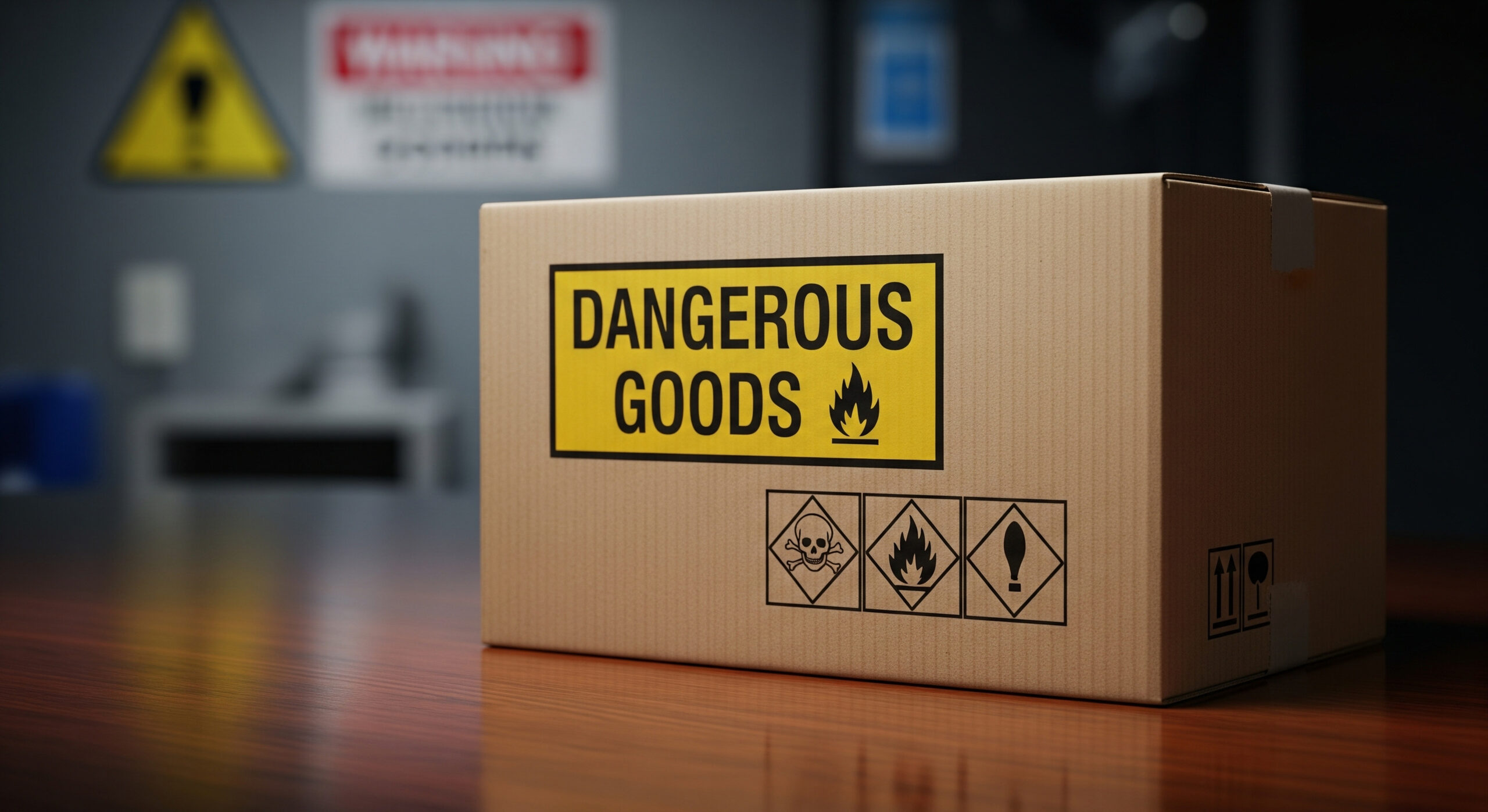
In a perfect world, every shipment that contains hazardous materials would be clearly declared, properly classified, and fully documented. In reality, that’s not always what happens. Shippers sometimes fail to disclose hazardous contents, whether due to lack of knowledge, misunderstanding of the regulations, or intentional avoidance. For carriers, freight forwarders, warehouse teams, and compliance professionals, that creates a serious challenge. You are left asking a critical question before the shipment ever moves: is this hazmat?
That question isn’t just procedural. It’s tied directly to safety, regulatory compliance, and liability. Accepting an undeclared hazardous shipment can expose your operation to fines, rejected cargo, transport delays, and in the worst cases, incidents involving fire, chemical exposure, or environmental harm. Recognizing the signs early is essential, and it requires more than a checklist. It requires awareness, experience, and the right training.
It is time to stop guessing and start identifying hazmat with accuracy. Hazmat University offers flexible online training, live virtual webinars, and custom sessions designed to help you recognize, classify, and handle hazardous materials correctly. Enroll today and build real-world skills that protect your hazmat shipping operations.
Undeclared Hazmat Is a Growing Risk
Undeclared hazardous materials are not rare exceptions. They are a persistent issue across supply chains, especially as e-commerce expands and new technologies introduce complex products like lithium batteries and chemical-based components.
Many shippers simply do not realize their products fall under hazardous materials regulations. Others may assume that small quantities or consumer-type packaging exempt them from compliance. In some cases, documentation is incomplete or inaccurate, leaving critical details out of the shipping papers.
From an operational standpoint, the risk is compounded by volume and speed. Teams are expected to process shipments quickly, often without the time to deeply investigate every package. That’s where training becomes essential. You need to know what to look for so you can quickly identify red flags before a shipment moves forward.
Common Indicators That a Shipment May Be Hazmat
When a shipper does not disclose hazardous contents, the burden shifts to you to recognize potential indicators. These signals aren’t always obvious, but they tend to follow patterns.
- Product descriptions that raise questions: Vague or overly generic descriptions like “electronics,” “parts,” or “samples” can sometimes mask hazardous components such as lithium batteries or chemical substances. Specificity matters, and a lack of it is often a warning sign.
- Unusual packaging characteristics: Heavy-duty packaging, inner cushioning, absorbent materials, or multiple layers of containment may suggest that the contents require protection due to hazardous properties.
- Inconsistent or incomplete documentation: Missing safety data sheets, absent technical specifications, or discrepancies between declared weight and product type can indicate that important information is being withheld or overlooked.
- Shipping origin and product type combinations: Certain industries and regions are more commonly associated with hazardous materials, such as electronics manufacturing, automotive components, and chemical production.
- Labels or markings that do not match the documentation: Even partial markings, removed labels, or residue from previous hazard labels can signal that the package has contained hazardous materials.
Recognizing these indicators does not automatically confirm that a shipment is hazmat. It does, however, give you a reason to pause, ask questions, and verify before proceeding.
Product Categories That Frequently Involve Hazmat
Some product categories consistently carry a higher likelihood of hazardous classification. Even when not disclosed, these categories should prompt closer scrutiny.
Lithium batteries are a prime example. They are embedded in countless everyday products, from consumer electronics to industrial tools. Similarly, items such as aerosols, paints, adhesives, cleaning agents, and automotive fluids often fall under hazardous materials regulations depending on their composition.
What makes these categories challenging is that they are so common. A shipment of “household goods” or “equipment” can easily include regulated materials without being labeled as such. That is why professionals need a strong working knowledge of product types and their regulatory implications.
Without that knowledge, it is easy to overlook risks. With it, you can quickly connect the dots between a product description and its potential classification.
How to Investigate a Suspicious Shipment
When something does not feel right about a shipment, the next step is not guesswork. It is a structured investigation that balances efficiency with due diligence.
- Ask targeted questions: Reach out to the shipper and request clarification about the product, including composition, intended use, and any available safety documentation. Specific questions tend to produce more accurate answers.
- Request supporting documentation: Safety Data Sheets, technical specifications, and product manuals can provide critical insight into whether a material is regulated.
- Cross-check regulatory criteria: Compare the information you receive with the classification criteria under 49 CFR, IATA, or IMDG, depending on the mode of transport.
- Escalate when necessary: If uncertainty remains, involve a compliance specialist or trained hazmat professional who can make a more informed determination.
- Delay acceptance if needed: It is better to pause a shipment than to move forward with incomplete or questionable information.
This process does not need to slow down your operation. With proper training, it becomes a natural part of your workflow.
Want to handle situations like this without hesitation? Hazmat University’s online courses teach you how to identify red flags, investigate shipments, and apply regulations in real-world scenarios. Join a self-paced, online hazmat training course today and turn uncertainty into compliant decision-making.

The Role of Training in Identifying Undeclared Hazmat
Recognizing undeclared hazardous materials is not something you can rely on instinct alone to manage. It requires structured knowledge, reinforced through practical application.
Training provides the framework for understanding how hazardous materials are classified, how regulations are applied, and how to interpret the information you receive from shippers. More importantly, it helps you develop the judgment needed to act when something seems off.
- Regulatory awareness: Training ensures you understand the requirements under 49 CFR, IATA, and IMDG, including how materials are defined and classified.
- Product familiarity: Exposure to common hazardous materials and their characteristics makes it easier to identify them in real-world scenarios.
- Decision-making confidence: When you know the rules and how to apply them, you can make informed decisions quickly and accurately.
- Consistency across teams: Well-trained employees approach shipments with the same level of scrutiny, reducing variability and improving overall compliance.
Hazmat University’s training programs are built around these principles. They focus on practical understanding, not just theory, so professionals can apply what they learn immediately.
Why Self-Paced and Live Training Both Matter
Different situations call for different types of learning. Self-paced training allows individuals to build foundational knowledge at their own speed, while live training provides the opportunity to engage with instructors and ask questions in real time.
Self-paced courses are especially valuable for learning the structure of regulations, understanding classification systems, and reviewing material as needed. They provide flexibility and accessibility, making it easier for employees to complete training without disrupting their work schedules.
Live webinars through BDG, on the other hand, bring an interactive element that is difficult to replicate. Participants can discuss real scenarios, clarify uncertainties, and gain insights from experienced instructors who understand the challenges of day-to-day operations.
Together, these formats create a more complete learning experience. One builds the foundation, and the other strengthens application.
Building a Culture That Questions and Verifies
Ultimately, identifying undeclared hazmat is not just an individual responsibility. It is a cultural one. Organizations that prioritize safety and compliance encourage their teams to question, verify, and take the time to get it right.
That culture starts with leadership but is reinforced through training and daily practice. Employees should feel empowered to raise concerns, ask for clarification, and delay shipments when necessary.
When teams operate with this mindset, the risk of undeclared hazardous materials moving through the system is significantly reduced. More importantly, it creates a safer environment for everyone involved in the supply chain.
Turn Uncertainty Into Control With Hazmat University
Undeclared hazardous materials will always be a challenge in the logistics and transportation industry. The goal is not to eliminate uncertainty entirely. The goal is to manage it effectively.
By understanding the indicators, asking the right questions, and relying on structured training, professionals can take control of situations that might otherwise lead to serious consequences. What starts as a simple question, is it hazmat, becomes an opportunity to apply knowledge, protect operations, and maintain compliance.
Do not leave hazmat identification to chance. Hazmat University offers self-paced online courses designed to help you recognize and handle hazardous materials with confidence. Enroll today and give your team the knowledge they need to stay compliant, safe, and prepared for every shipment.
Be Confident. Be Competent. Be Compliant.
